
Connect. Secure. Manage.
Network Design
Cisco and Meraki network design for UK offices, branches and data centres, with particular focus on London, Kent and surrounding counties.
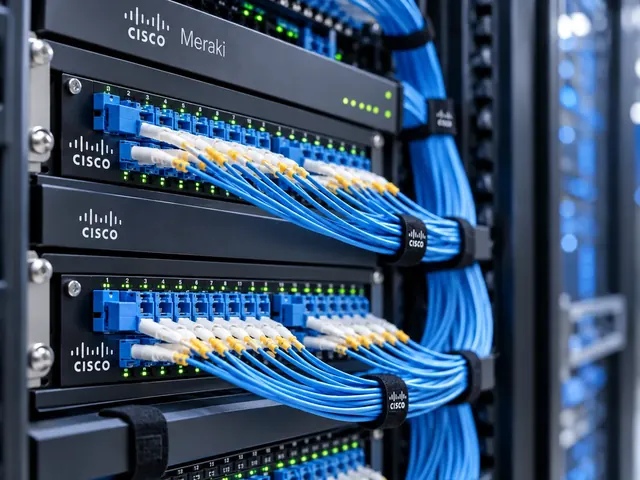
Devices supported
across the UK
Client locations
supported
Traffic handled
at peak time
Average
response time
Average response is not a resolution time or a contractual guarantee. Support scope and response commitments are agreed for each engagement.
Network design turns your needs into a plan that can be built and tested. We design Cisco and Meraki networks for offices, branches and data centres. App paths, security boundaries and support roles are worked out before installation. The result explains how the parts connect, why they were chosen and how the service will be run.
A new office needs a different starting point from an established estate that has grown through acquisitions. We consider the equipment you already have, the services you must retain and the constraints around change. Replacement is one possible outcome, not the default purpose of the exercise.
A clear requirement
Turn the business need into a practical network scope with visible dependencies.
A controlled delivery
Plan implementation, testing and rollback before production changes begin.
A supportable result
Leave useful records, ownership and escalation routes behind.
Design around the work the network carries
We start by identifying the users, devices and apps that depend on the network. Staff access, guest network access, cloud apps, local systems and external counterparties can require different paths and different controls. Those needs should be visible in the design rather than buried in setup added during installation.
The physical setup matters too. Building layout, cabinet space, power, cabling and circuit availability can limit what is practical. A suitable logical architecture still needs a physical design that can be installed and maintained at the actual location.
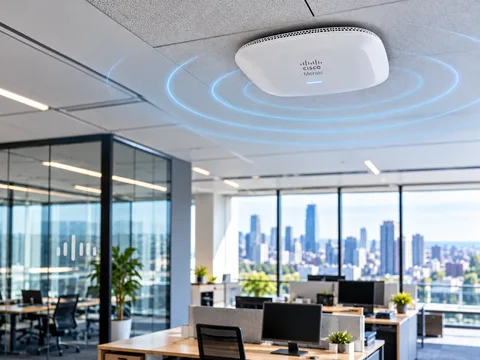
For office network design, this includes how wired and wireless access work together. For larger organisations, enterprise network design addresses consistency across departments, buildings and sites without ignoring legitimate differences between them.

Standards & partnerships
Confidence in the team behind your network.
 Cisco Partner
 Cisco Meraki
 Cyber Essentials
 Cyber Essentials Plus
MCI Network Services is operated by Proxar Ltd. Certifications apply to the certified legal entity and the scope of its certificates. View accreditation information
Select Cisco and Meraki platforms for their intended role
Cisco and Meraki network services cover different operating models and levels of technical complexity. We assess the proposed platform against routing, switching, wireless, security and management needs, rather than assuming that one product family is appropriate everywhere.
The design sets out dependencies on software, licences and connected systems. Where a required behaviour needs validation, it becomes a check before procurement or a focused proof-of-concept test. A feature listed for a product family is not enough evidence that every proposed device and release will support the same rollout.
Mixed setups are considered at their boundaries. Retained third-party equipment may remain suitable, provided the connection, policy and support duties are understood. The aim is a coherent network, not replacement for the sake of uniform branding.

A useful starting point
Not sure where to start?
Bring the requirement. We will help you define the engineering work.
Make resilience and security part of the architecture
We establish which failures the network should tolerate and how the remaining service will behave. Duplicate hardware is useful only when the design also considers power, physical paths, routing and the capacity available after a failure.
Security design starts with permitted communication. We check which systems need access to which services and where that access is controlled. Management traffic, guest access and connections to external organisations should not be left as informal exceptions to an otherwise documented design.
Operational recovery also needs attention. An engineer should have an appropriate route to investigate a fault when the normal management path is affected. The design records those needs without exposing sensitive access details in general project documentation.

Different environments. The same care.
Built around the work
your network supports.
Finance, banking and the wider private sector. We start with the systems and people that depend on your connections.
Finance & banking
Market-data paths, routing and provider coordination on clients’ behalf.
Financial-market services ↗Offices & multi-site teams
Reliable access between people, workplaces and business applications.
Office network design ↗Data centres & cloud
Network boundaries, workload connections and operational ownership.
Data centre networks ↗Separate the design levels clearly
A high-level design explains the architecture, major decisions and dependencies. A low-level design provides the rollout detail: addressing, interfaces, policies, management settings and the information needed to build consistently.
Not every engagement requires the same document set. A small change may need a tightly scoped design note, while a multi-site project benefits from reusable standards and clear site variations. We agree the deliverables around the work rather than producing documentation simply to satisfy a template.
The design should include acceptance criteria. Those criteria connect the proposed outcome to tests that can be carried out after installation, making it easier to distinguish a completed build from a service that has actually met its needs.
Plan the route from design to operation
A target diagram is not a migration plan. Existing connections, maintenance windows, application-owner testing and rollback arrangements need their own consideration. We find the changes that can be staged and the points at which the business must accept disruption or make a decision.
The receiving team also needs a supportable result. Configuration ownership, monitoring, backups, documentation updates and supplier escalation should have named duties. A network that is easy to install but difficult to maintain is not a complete design success.
We provide network design throughout the UK, with London, Kent, Sussex, Essex and Berkshire as particular areas of focus. Site attendance is planned where the physical setup or operational arrangements require it; remote design work is combined with checked local information.

Questions about network design
Can you design around equipment we already own?
Yes. We assess whether the equipment meets the needs and identify any material limitations. The design can retain suitable components, isolate legacy dependencies or provide a staged replacement path where immediate wholesale change would be unnecessary or disruptive.
Will the design include a bill of materials?
It can, where procurement detail is part of the scope. The list should identify the relevant equipment, optics, licences and dependencies, rather than just headline devices. Availability and commercial terms still need confirmation when an order is placed.
Can another team implement your design?
Yes, provided the agreed deliverables contain the detail that team needs. We make assumptions, prerequisites and acceptance criteria clear so rollout is not dependent on undocumented knowledge held by the designer.
What should we discuss first?
The business outcome, current estate and intended timescale are the most useful starting points. Discuss a Cisco or Meraki network design before choosing equipment, particularly where the project involves several sites or important third-party connections.
Talk to a specialist
What does your network need next?
Tell us what you are planning, changing or trying to improve. We will help define a practical next step and the engineering scope.
+44 203 196 6566Choose option 1
sales@proxar.co.ukUK-wide service.
Most of our engineers are based in Kent, with a focus on London, Sussex, Essex and Berkshire.
Existing customers should use their agreed support and escalation channels. This form is for service enquiries, not a monitored emergency ticket.
Tell us what you need.
A short outline is enough. Please do not include passwords or sensitive network details.
Thank you. Your enquiry has been submitted.
Please check your name, email and message, then try again.
Your form session expired. Please try again.
Please wait a minute before sending another enquiry.
We could not submit your enquiry. Please call or email us instead.