
Connect. Secure. Manage.
WAN Bandwidth Planning
Plan WAN capacity from observed demand and growth requirements, identifying congestion risks and whether policy changes can defer a circuit upgrade.
Devices supported
across the UK
Client locations
supported
Traffic handled
at peak time
Average
response time
Average response is not a resolution time or a contractual guarantee. Support scope and response commitments are agreed for each engagement.
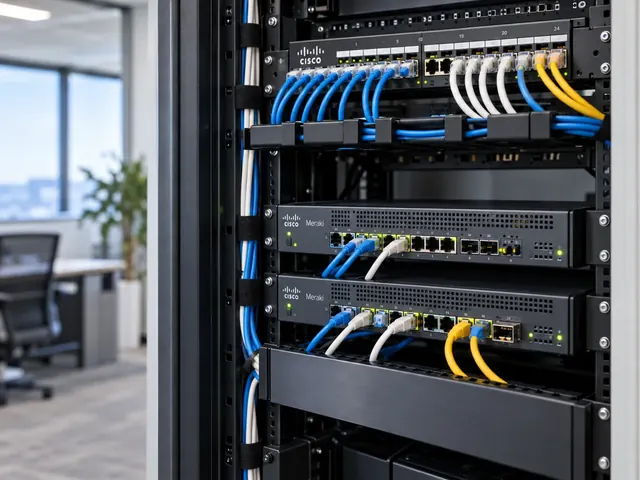
WAN bandwidth planning connects circuit decisions to the way a business actually uses its network. Upgrading a line because it occasionally looks busy can waste money; keeping an undersized backup can leave essential work unavailable during an incident. MCI Network Services develops capacity plans for Cisco and Meraki WAN estates using observed demand, application requirements and realistic growth assumptions. The result explains what capacity is needed, where and why.
The whole path
Understand how sites, providers, cloud networks and security controls fit together.
Resilience that can be tested
Separate a second circuit from genuine end-to-end service resilience.
Provider coordination
Keep addressing, routing and escalation ownership clear across organisations.
Establish a representative baseline
We collect or review measurements across a period that reflects the organisation’s working pattern. Busy hours, backups, software distribution, month-end activity and special events can produce very different loads. A short observation during a quiet week is not presented as a reliable forecast for the whole year. Gaps in measurement coverage are identified before recommendations are made.
The baseline records both traffic directions and the measurement interval. Average utilisation can conceal bursts that create loss or delay, while a high peak may be harmless if the application can queue its work. We interpret the numbers alongside user experience and interface evidence. Capacity planning should explain service consequences, not simply colour every busy interface red.

Standards & partnerships
Confidence in the team behind your network.
 Cisco Partner
 Cisco Meraki
 Cyber Essentials
 Cyber Essentials Plus
MCI Network Services is operated by Proxar Ltd. Certifications apply to the certified legal entity and the scope of its certificates. View accreditation information
Identify what consumes the connection
Traffic visibility helps distinguish useful business demand from avoidable contention. We review available flow information, application statistics and scheduling records, subject to privacy and access requirements. The aim is not to inspect every user’s content but to understand the major traffic classes and their timing. Where the available platform cannot provide reliable application detail, we state that limitation.
Large transfers are not automatically wasteful. Replication, backup and software updates may be essential, but their schedules and completion deadlines should be considered alongside interactive traffic. Moving a transfer to a quieter period may defer an upgrade; doing so without checking the recovery or operational requirement may create a different risk. Application owners therefore take part in the demand review.

A useful starting point
Not sure where to start?
Bring the requirement. We will help you define the engineering work.
Account for the actual service rate
A physical interface speed can exceed the purchased service rate. Provider policing, shaping, encapsulation and security processing may further affect usable throughput. We compare contracted capacity with observed behaviour and the capabilities of the Cisco or Meraki edge. A higher-speed circuit will not solve a bottleneck in an undersized firewall or encrypted tunnel endpoint.
The plan also identifies aggregation points. Several branches can share a hub circuit, cloud gateway or security service that becomes the limiting component. Upgrading individual branches without reviewing the common path may increase contention elsewhere. We model the relevant shared dependencies and avoid presenting every site as an isolated capacity decision.

Different environments. The same care.
Built around the work
your network supports.
Finance, banking and the wider private sector. We start with the systems and people that depend on your connections.
Finance & banking
Market-data paths, routing and provider coordination on clients’ behalf.
Financial-market services ↗Offices & multi-site teams
Reliable access between people, workplaces and business applications.
Office network design ↗Data centres & cloud
Network boundaries, workload connections and operational ownership.
Data centre networks ↗Plan for growth with explicit assumptions
Growth can come from additional staff, new offices, cloud migration, higher-quality media or a change in backup strategy. We record the proposed change and its expected effect rather than applying a generic multiplier to current traffic. Where an application’s demand is uncertain, a pilot or vendor-supported sizing exercise may provide better evidence than a confident but unsupported estimate.
The recommendation distinguishes committed changes from possible future scenarios. This allows the customer to compare an immediate upgrade with a staged approach and understand which event would trigger the next step. Procurement lead times and contract terms are included where supplied, but we do not invent carrier prices or savings. Commercial decisions remain tied to real quotations and service obligations.

Size the surviving path, not just the primary
Resilience planning asks what happens when traffic moves to a smaller connection. We identify the applications that must continue and the traffic that can be reduced or deferred. The surviving path may need different shaping and prioritisation, especially where a fixed circuit fails over to cellular access. Nominal backup bandwidth is not treated as a guaranteed application outcome.
We can connect the capacity plan with WAN failover testing to observe the degraded state. Testing may reveal that the route works but important services become unusable under realistic load. Those findings help justify an upgrade or an agreed operating restriction, rather than leaving the business to discover the limitation during an outage.

Make the plan usable for future decisions
The deliverable identifies constrained locations, shared bottlenecks, prioritised improvements and the evidence behind them. It includes review thresholds and the measurements needed to recognise when assumptions no longer hold. An engineer or procurement manager should be able to revisit the plan without reconstructing the original analysis from scattered dashboard screenshots.
MCI can assess a single office or build a capacity roadmap for a UK-wide Cisco and Meraki estate. Our WAN performance service can investigate specific symptoms alongside the planning work. For an initial scope, provide circuit rates, site counts, available usage history and planned business changes. We will separate capacity requirements from faults or policy problems that need a different remedy.

Talk to a specialist
What does your network need next?
Tell us what you are planning, changing or trying to improve. We will help define a practical next step and the engineering scope.
+44 203 196 6566Choose option 1
sales@proxar.co.ukUK-wide service.
Most of our engineers are based in Kent, with a focus on London, Sussex, Essex and Berkshire.
Existing customers should use their agreed support and escalation channels. This form is for service enquiries, not a monitored emergency ticket.
Tell us what you need.
A short outline is enough. Please do not include passwords or sensitive network details.
Thank you. Your enquiry has been submitted.
Please check your name, email and message, then try again.
Your form session expired. Please try again.
Please wait a minute before sending another enquiry.
We could not submit your enquiry. Please call or email us instead.