
Connect. Secure. Manage.
Cisco Networks for CCTV
Design Cisco networks for CCTV, checking power, bandwidth and segmentation while keeping surveillance policy with the responsible operator.
Devices supported
across the UK
Client locations
supported
Traffic handled
at peak time
Average
response time
Average response is not a resolution time or a contractual guarantee. Support scope and response commitments are agreed for each engagement.
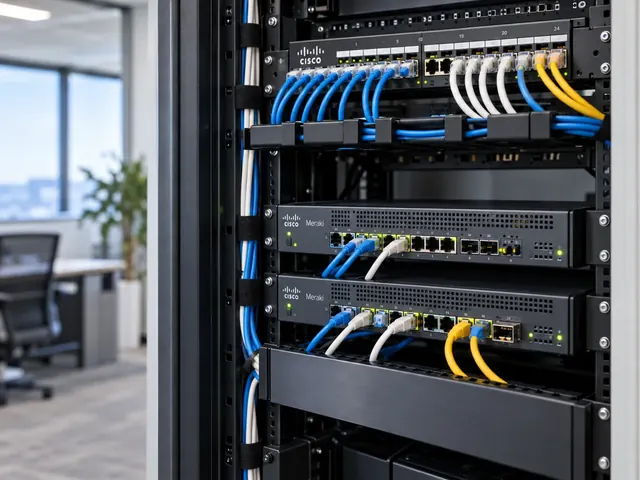
Cisco networks for CCTV carry camera feeds, recording traffic and access for viewing or maintenance. We plan bandwidth, power, addresses and access with the camera specialists. Our scope is the Cisco or Meraki network around that system. Camera coverage, image evidence and surveillance certification remain separate matters unless agreed through the right specialists.
Dashboard clarity
Structure organisations, networks and permissions around real operational ownership.
Consistent sites
Use repeatable standards without ignoring the differences between locations.
Practical operations
Keep cloud management connected to physical links, users and business services.
Understand the recording and viewing architecture
We identify where video is recorded, where operators view it and which services are hosted locally or externally. A system streaming continuously to a recorder has different network demands from one using camera-local storage and occasional remote viewing. The design should follow the actual architecture rather than assuming all CCTV traffic behaves the same way.
We also examine simultaneous activity. Several operators reviewing footage, a video wall and an export during an incident can create peaks beyond ordinary recording traffic. The camera-system owner supplies the relevant quality and stream needs, and we translate them into network capacity and path considerations. Where information is missing, the sizing assumption is flagged for confirmation rather than hidden inside a generic allowance per camera.

Standards & partnerships
Confidence in the team behind your network.
 Cisco Partner
 Cisco Meraki
 Cyber Essentials
 Cyber Essentials Plus
MCI Network Services is operated by Proxar Ltd. Certifications apply to the certified legal entity and the scope of its certificates. View accreditation information
Plan power and physical connectivity
The access-layer review covers camera locations, cable lengths, port availability and the power needs of each device type. Cameras with extra functions can have different demand from simple fixed units. We calculate the switch budget and the effect of degraded power operation, then identify which cameras share the same cabinet or supply dependency.
Outdoor or difficult-access installations require coordination with the appropriate installation team. We agree the network handoff and record environmental, mounting and maintenance needs. The networking scope does not replace specialist approval for electrical work or physical-security installation. Clear boundaries help prevent a project delay caused by each supplier assuming that another party would provide the cable route, power source or access equipment.

A useful starting point
Not sure where to start?
Bring the requirement. We will help you define the engineering work.
Separate camera, recorder and administration traffic
We set out the required flows between cameras, recorders, management systems and authorised viewing stations. Those flows inform VLANs, routing and security policy. A dedicated camera VLAN is useful organisation. But it does not on its own prevent access to other networks. The permitted paths must be enforced and tested at the appropriate boundary.
Supplier remote access receives separate attention. We identify how it is approved, authenticated and removed when no longer needed. Cameras and recording systems should not be exposed broadly to the internet simply to make maintenance convenient. Where an external platform requires network access, we check its documented needs and establish who owns the resulting rule and integration.

Different environments. The same care.
Built around the work
your network supports.
Finance, banking and the wider private sector. We start with the systems and people that depend on your connections.
Finance & banking
Market-data paths, routing and provider coordination on clients’ behalf.
Financial-market services ↗Offices & multi-site teams
Reliable access between people, workplaces and business applications.
Office network design ↗Data centres & cloud
Network boundaries, workload connections and operational ownership.
Data centre networks ↗Account for multicast and specialist traffic where used
Some CCTV designs use multicast or other traffic patterns that need specific switching and routing support. We check the actual need with the system vendor rather than enabling multicast everywhere as a precaution. Receiver membership, querier placement and routed boundaries must match the intended rollout, with attention to the effect of unexpected flooding on shared links.
Our Cisco IP multicast services can support more complex designs or fault investigation. We distinguish network delivery from recording-system behaviour: a complete stream reaching the recorder does not prove that storage or playback is working correctly. Testing therefore includes observations from the surveillance platform and counters and forwarding state on the network devices.

Test representative operation and recovery
The acceptance plan exercises recording, authorised viewing and relevant export workflows. We inspect interface errors, link usage and power events, then compare the observed traffic with the sizing assumptions. Tests should include representative camera groups and the busiest expected viewing arrangement, not only one camera connected beside the network cabinet.
Resilience tests are chosen with the system owner because loss of a network component can affect both recording and operator visibility. We check which functions continue during a link, switch or WAN failure and what evidence remains available afterwards. The report states the tested conditions and any limitations, avoiding a general availability claim based only on redundant uplinks in a drawing.

Deliver records that support both IT and security teams
The handover connects physical camera locations to ports, addresses, recording destinations and support duties. It includes approved remote-access paths, monitoring needs and change contacts. Privacy, retention and permitted viewing remain with the customer’s responsible teams, supported by accurate technical information rather than assumptions that network isolation alone resolves those issues.
MCI can assess a current CCTV network, prepare infrastructure for a new system or investigate performance faults with the relevant vendor. For Meraki MV projects, camera network readiness provides a product-focused starting point. We help establish a network that can be operated and changed safely while keeping surveillance-system ownership and specialist obligations clear.

Technical references
- MV smart camera frequently asked questions — Cisco / Cisco Meraki
- Switch port configuration — Cisco / Cisco Meraki
Talk to a specialist
What does your network need next?
Tell us what you are planning, changing or trying to improve. We will help define a practical next step and the engineering scope.
+44 203 196 6566Choose option 1
sales@proxar.co.ukUK-wide service.
Most of our engineers are based in Kent, with a focus on London, Sussex, Essex and Berkshire.
Existing customers should use their agreed support and escalation channels. This form is for service enquiries, not a monitored emergency ticket.
Tell us what you need.
A short outline is enough. Please do not include passwords or sensitive network details.
Thank you. Your enquiry has been submitted.
Please check your name, email and message, then try again.
Your form session expired. Please try again.
Please wait a minute before sending another enquiry.
We could not submit your enquiry. Please call or email us instead.