
Connect. Secure. Manage.
High-Density Wi-Fi Design
Design Cisco or Meraki Wi-Fi for busy shared spaces, balancing airtime, channel reuse and client behaviour rather than headline access-point capacity.
Devices supported
across the UK
Client locations
supported
Traffic handled
at peak time
Average
response time
Average response is not a resolution time or a contractual guarantee. Support scope and response commitments are agreed for each engagement.
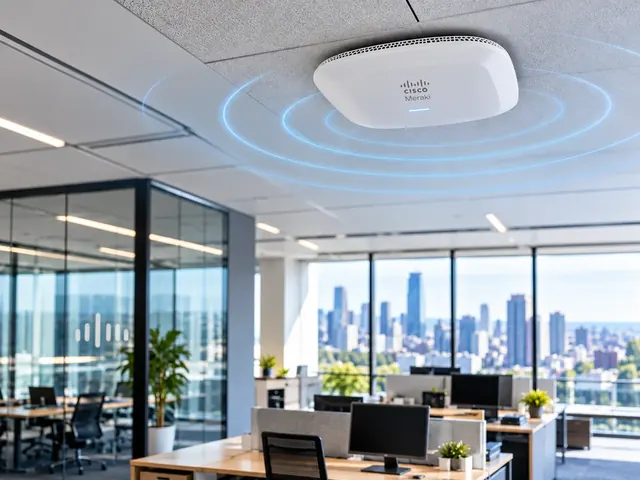
High-density Wi-Fi design plans for many devices working in the same space at once. We assess airtime and app demand in busy offices, meeting rooms and similar areas. Cisco and Meraki choices follow that demand and the radio environment. The aim is useful service at busy times without adding needless interference elsewhere in the building.
Coverage and capacity
Design Wi-Fi around the spaces, devices and traffic that depend on it.
Secure access
Align authentication, segmentation and guest access with the wider network.
Measured performance
Validate roaming, interference and user experience instead of relying on signal bars.
Estimate concurrent demand, not just headcount
A room containing one hundred people does not always produce the same wireless workload. Some users may have several devices, while only a subset actively sends traffic. A training session downloading large files differs from a meeting using video collaboration. We find the likely mix and agree a design scenario that reflects the business’s real busy periods.
Client capabilities also matter. Older devices, limited radio bands and different antenna arrangements can affect how efficiently airtime is used. We assess the expected population instead of assuming that every endpoint supports the latest features. The design should explain its assumptions about active users and apps so later capacity reviews have a meaningful basis for comparison.

Standards & partnerships
Confidence in the team behind your network.
 Cisco Partner
 Cisco Meraki
 Cyber Essentials
 Cyber Essentials Plus
MCI Network Services is operated by Proxar Ltd. Certifications apply to the certified legal entity and the scope of its certificates. View accreditation information
Design cells and channel reuse deliberately
High density is not solved by installing as many access points as possible. Devices sharing a channel must contend for access, and excessive overlap can reduce the benefit of extra equipment. We assess placement, channel width and power as a combined design problem. The appropriate settings depend on the setup and client needs, not a universal maximum-performance template.
The plan considers neighbouring spaces and floors and the busiest room. A setup that appears suitable in isolation can create contention elsewhere in the building. We find the intended coverage boundaries and the installation conditions needed to achieve them. Directional patterns or carefully chosen mounting may be useful in some spaces, but their suitability must be checked for the chosen hardware and layout.

A useful starting point
Not sure where to start?
Bring the requirement. We will help you define the engineering work.
Use the available bands without excluding required clients
We review how the client population can use the supported bands and what security or regional conditions apply. Additional spectrum can help. But it does not on its own solve an overloaded design if most devices remain on another band. The proposal distinguishes capability available in the access point from capability that the actual clients can use.
Band and minimum-rate policies are assessed through compatibility testing. Removing inefficient legacy behaviour may improve capacity. But it can also disconnect devices the business still relies on. We identify those trade-offs and agree a migration or exception approach where needed. A high-density design should not be declared successful because difficult clients have simply been excluded without the customer’s approval.

Different environments. The same care.
Built around the work
your network supports.
Finance, banking and the wider private sector. We start with the systems and people that depend on your connections.
Finance & banking
Market-data paths, routing and provider coordination on clients’ behalf.
Financial-market services ↗Offices & multi-site teams
Reliable access between people, workplaces and business applications.
Office network design ↗Data centres & cloud
Network boundaries, workload connections and operational ownership.
Data centre networks ↗Check the rest of the service path
Busy wireless areas place demand on switching, address assignment, authentication and internet or app network access. We review these dependencies alongside RF capacity. A large group arriving at once can produce a connection and authentication burst that differs from steady-state traffic, so onboarding behaviour may need its own test.
We also establish the treatment of guest traffic and shared media devices. Multiple SSIDs and unnecessary broadcast or discovery traffic can consume resources without helping users. The design aims for a manageable service set, with clear access boundaries and only the discovery required for approved apps. Security and usability decisions are made together rather than added after capacity planning is complete.

Validate with a representative load
A survey provides important environmental evidence, but capacity claims need appropriate workload testing or clearly stated modelling assumptions. We agree what can be exercised before the site is fully occupied and what must be observed during an initial operating period. A single laptop speed test cannot establish how a crowded room will behave during a simultaneous activity.
The validation looks at user experience and aggregate throughput. We examine connection success, app responsiveness and relevant latency or loss observations. Where a problem appears, we distinguish airtime contention from upstream bottlenecks or endpoint limitations. This prevents a capacity investigation from becoming an automatic recommendation to add still more access points to an already crowded RF setup.
Make future growth and event changes manageable
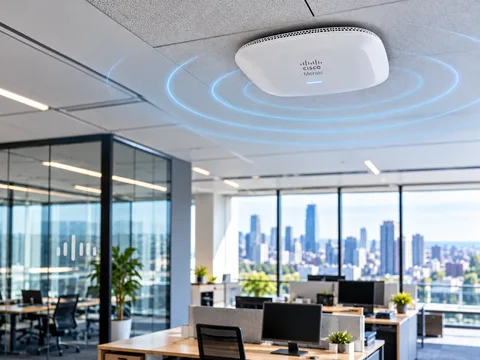
The handover records the design population, intended apps, setup principles and installation assumptions. Changes to seating, room use or client devices should trigger a review where they affect the original model. We also agree how operations will recognise rising contention or failed onboarding before complaints become widespread.
MCI can provide high-density design within a wider Wi-Fi design and survey project or assess a particular busy area in a current estate. Share the room layout, peak attendance and typical activity to establish the scope. The proposal will explain what capacity can be supported under the agreed conditions and what evidence is needed, rather than relying on a product’s headline maximum client count as a service guarantee.
Technical references
- High-density Wi-Fi deployments — Cisco / Cisco Meraki
- Channel planning best practices — Cisco / Cisco Meraki
Talk to a specialist
What does your network need next?
Tell us what you are planning, changing or trying to improve. We will help define a practical next step and the engineering scope.
+44 203 196 6566Choose option 1
sales@proxar.co.ukUK-wide service.
Most of our engineers are based in Kent, with a focus on London, Sussex, Essex and Berkshire.
Existing customers should use their agreed support and escalation channels. This form is for service enquiries, not a monitored emergency ticket.
Tell us what you need.
A short outline is enough. Please do not include passwords or sensitive network details.
Thank you. Your enquiry has been submitted.
Please check your name, email and message, then try again.
Your form session expired. Please try again.
Please wait a minute before sending another enquiry.
We could not submit your enquiry. Please call or email us instead.