
Connect. Secure. Manage.
Network Documentation Recovery
Reconstruct diagrams, addressing plans and device records for an undocumented Cisco or Meraki environment, with clear ownership and update procedures.
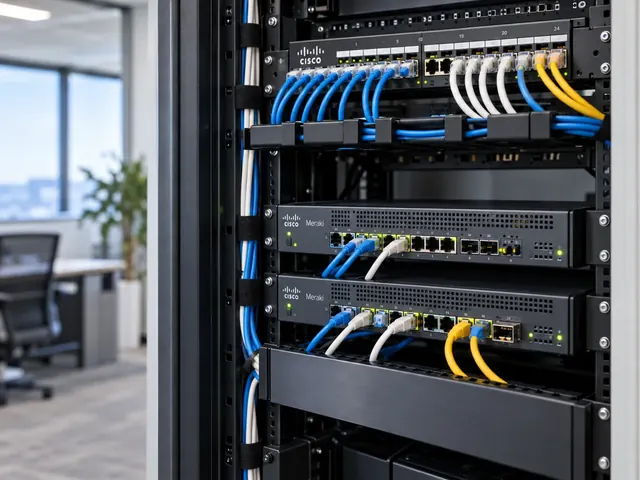
Devices supported
across the UK
Client locations
supported
Traffic handled
at peak time
Average
response time
Average response is not a resolution time or a contractual guarantee. Support scope and response commitments are agreed for each engagement.
Network documentation recovery rebuilds missing or outdated records. We check the Cisco and Meraki layout, addresses, links and support roles against the live estate. The aim is information engineers can trust during a change or fault. A clear diagram helps, but the work also needs to explain how the network is used and who owns it.
This work is particularly useful after a supplier change, staff departure, acquisition or period of rapid growth. A network can continue working for years while the knowledge needed to change or recover it becomes increasingly dependent on one person.
A clear requirement
Turn the business need into a practical network scope with visible dependencies.
A controlled delivery
Plan implementation, testing and rollback before production changes begin.
A supportable result
Leave useful records, ownership and escalation routes behind.
Identify which missing information creates the greatest risk
We start with the tasks your team needs to perform and the records that would support them. Troubleshooting a branch outage, replacing a core device and planning an address change may require different information.
The recovery scope prioritises material gaps rather than attempting to document every possible detail at once. Important external connections, management access, routing boundaries and recovery dependencies often deserve attention before cosmetic improvements to current diagrams.
Available records are retained as evidence, even when they are incomplete. Old diagrams, backups of the settings and supplier notes can help explain the setup, but their accuracy must be checked before they become the new baseline.

Standards & partnerships
Confidence in the team behind your network.
 Cisco Partner
 Cisco Meraki
 Cyber Essentials
 Cyber Essentials Plus
MCI Network Services is operated by Proxar Ltd. Certifications apply to the certified legal entity and the scope of its certificates. View accreditation information
Recover facts from authorised sources
We use appropriate management information, settings, inventories and discussions with the people who know the estate. Physical verification may be required where logical data cannot establish cabinet placement, patching or circuit handoffs.
Discovery and inventory can provide the device foundation. Documentation recovery then develops the relationships and operating context that make that inventory useful.
The process records the confidence of the information. A directly checked connection, a statement from a previous provider and an unresolved assumption should not appear indistinguishable in the final document set.

A useful starting point
Tell us what is happening.
A short description of the problem is enough for an initial discussion.
Produce diagrams that explain the network’s purpose
Useful topology diagrams show the level of detail needed for their audience. A high-level view can explain sites, major services and boundaries, while a more detailed view supports rollout and fault investigation.
We identify important traffic paths and dependencies without making every diagram unreadable. The relevant addressing, interfaces and policy references can sit in supporting records rather than being forced onto a single page.
Cisco and Meraki management boundaries are documented alongside the physical topology. An engineer needs to know where a setting is owned and which management setup controls it, not merely which logo appears on the hardware.

Different environments. The same care.
Built around the work
your network supports.
Finance, banking and the wider private sector. We start with the systems and people that depend on your connections.
Finance & banking
Market-data paths, routing and provider coordination on clients’ behalf.
Financial-market services ↗Offices & multi-site teams
Reliable access between people, workplaces and business applications.
Office network design ↗Data centres & cloud
Network boundaries, workload connections and operational ownership.
Data centre networks ↗Recover the operational knowledge around the equipment
The document set can include setup references, circuit information, supplier duties, support contacts and the steps needed for common operational tasks. The exact scope follows the risks and activities identified at the start.
Recovery procedures deserve careful validation. A historical instruction may no longer match the installed software or connected services. We distinguish a procedure that has been reviewed from one that has been tested, and identify where a controlled exercise is required.
Sensitive access details are kept in the appropriate protected system. General documentation can explain the authorised access route without embedding passwords or private keys in widely shared files.

Establish ownership so the records stay useful
The final handover identifies who maintains each record and how updates become part of normal change control. Without that ownership, recovered documentation can become stale after the next few projects.
We can align the output with your current documentation or asset-management system where included in the scope. Consistent identifiers and version references help link diagrams, device records and setup evidence without creating another disconnected repository.
The result supports future configuration audits, design work and support. It should reduce the amount of rediscovery needed whenever a different engineer becomes involved, while making any unresolved gaps visible rather than hiding them behind a claim of completeness.
Documentation recovery questions
Can you document a network with no reliable diagrams?
Yes, through an agreed discovery and verification process. The scope and available access determine the coverage. We record any areas that cannot be established rather than drawing connections from assumption and presenting them as discovered facts.
Will the output include passwords and credentials?
Not in general documentation. Access information must be handled through the customer’s approved secure process. The documents can identify ownership and access procedures without exposing the secrets needed to use them.
Is this the same as redesigning the network?
No. Recovery records the current setup and its known limitations. It may reveal issues that justify a separate design or remediation project. But the documentation exercise should not silently change the estate it is trying to describe.
What should we provide first?
Any current diagrams, asset records and a description of the knowledge gaps are useful. Start network documentation recovery so the work can focus on the information your team most needs to operate safely.
Talk to a specialist
Need a specialist view?
Tell us what is affected, what changed and what your team has already checked. A short outline is enough to start.
+44 203 196 6566Choose option 1
sales@proxar.co.ukUK-wide service.
Most of our engineers are based in Kent, with a focus on London, Sussex, Essex and Berkshire.
Existing customers should use their agreed support and escalation channels. This form is for service enquiries, not a monitored emergency ticket.
Tell us what you need.
A short outline is enough. Please do not include passwords or sensitive network details.
Thank you. Your enquiry has been submitted.
Please check your name, email and message, then try again.
Your form session expired. Please try again.
Please wait a minute before sending another enquiry.
We could not submit your enquiry. Please call or email us instead.