
Connect. Secure. Manage.
Meraki Switch Stack Design
Plan Meraki switch stacks around supported hardware, resilient links and replacement procedures, validating the effects of a failed member or uplink.
Devices supported
across the UK
Client locations
supported
Traffic handled
at peak time
Average
response time
Average response is not a resolution time or a contractual guarantee. Support scope and response commitments are agreed for each engagement.
Meraki switch stack design should begin with the failures the business needs to withstand. Combining compatible switches can simplify operation and support resilient connections, but it also creates shared dependencies that must be understood. MCI Network Services designs and reviews supported Meraki-managed switch stacks, including physical topology, uplinks, gateway roles and replacement procedures. We distinguish real stacking capabilities from dashboard-based management of several independent switches so that the design’s availability claims remain accurate.
Dashboard clarity
Structure organisations, networks and permissions around real operational ownership.
Consistent sites
Use repeatable standards without ignoring the differences between locations.
Practical operations
Keep cloud management connected to physical links, users and business services.
Establish the purpose of the stack
A customer may need additional access ports, a logical routing system or uplinks distributed across members. These objectives are related but not identical. We identify the endpoints and applications served by each physical switch and the effect of losing that member. Devices connected only to a failed switch still lose their connection; a stack does not make a single endpoint cable redundant.
The assessment also considers whether a stack is the right answer at all. Separate routed switches can offer different fault and maintenance boundaries. Cabinet layout, staffing and recovery requirements influence the choice. We document why the proposed arrangement fits the site rather than treating stacking as a default feature that should be enabled whenever compatible equipment is available.

Standards & partnerships
Confidence in the team behind your network.
 Cisco Partner
 Cisco Meraki
 Cyber Essentials
 Cyber Essentials Plus
MCI Network Services is operated by Proxar Ltd. Certifications apply to the certified legal entity and the scope of its certificates. View accreditation information
Verify platform and member compatibility
Supported member combinations, stacking methods and software requirements vary across Meraki-managed switch families. We check the exact hardware and management mode, not just whether the units share a vendor name. Uplink modules, stacking interfaces and cable requirements are included in the assessment. A design using a feature available on one family should not be copied unchanged to another without validation.
Existing configuration matters when members are added to an operating stack. Routed interfaces or independent settings may need explicit treatment during the transition. We identify what will be retained, moved or rebuilt and ensure the change procedure reflects the current platform documentation. Hardware and software alignment are completed before a production addition where the supported process requires them.

A useful starting point
Not sure where to start?
Bring the requirement. We will help you define the engineering work.
Design physical paths and power separately
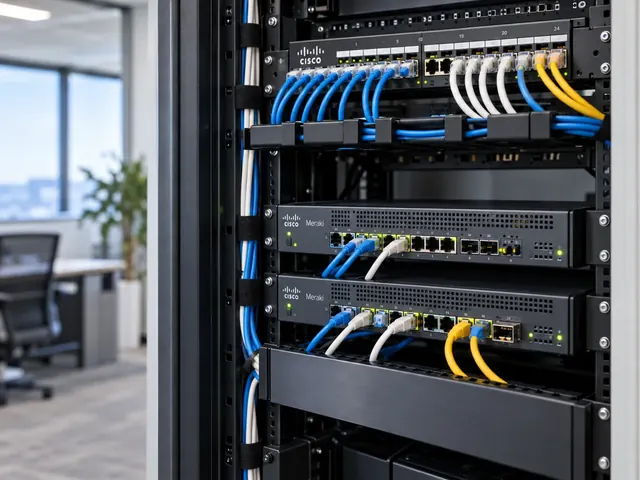
The stacking topology should use the supported resilient arrangement and practical cable routing. We assess what happens when one stacking link fails, including any reduction in available capacity. A complete logical diagram is not enough if all cables are vulnerable to the same accidental disconnection or cannot be accessed safely during a replacement.
Power resilience is evaluated independently. Several members connected to one failed power source do not provide meaningful device diversity. We review supplies, rack distribution and the site’s backup-power arrangements, without claiming that a switch feature covers the whole electrical path. The design records shared dependencies so that a customer can decide whether the remaining exposure is acceptable for the services attached.

Different environments. The same care.
Built around the work
your network supports.
Finance, banking and the wider private sector. We start with the systems and people that depend on your connections.
Finance & banking
Market-data paths, routing and provider coordination on clients’ behalf.
Financial-market services ↗Offices & multi-site teams
Reliable access between people, workplaces and business applications.
Office network design ↗Data centres & cloud
Network boundaries, workload connections and operational ownership.
Data centre networks ↗Align uplinks, VLANs and routing
We define how the stack connects upstream and whether link aggregation is supported in the intended arrangement. VLAN carriage, spanning-tree roles and gateway placement must remain consistent across the logical system. A member with the correct access-port settings can still produce a site-wide problem if an uplink trunk or routed boundary is wrong.
For stacks providing Layer 3 services, we review the platform’s management-addressing and routing requirements explicitly. We also trace the path through firewalls or other policy enforcement. Our Meraki Layer 3 Switching work can define the routing design, while Meraki switch port policies establish the access roles on individual members.

Plan membership changes and recovery
Adding, replacing or removing a stack member requires a documented sequence. We record physical port identity, configuration mapping, software preparation and the point at which the new device can be connected. A replacement with a different port layout may need more than cloning a configuration. The support team should know which steps are safe while the rest of the stack remains operational.
Maintenance also has a shared-risk dimension. Software changes or logical-system faults may affect more than one member, depending on the platform and procedure. We explain the expected impact and avoid promising uninterrupted operation from a feature name. Recovery plans include configuration evidence, local access and a way to identify the affected member when dashboard visibility is limited.
Prove the intended behaviour
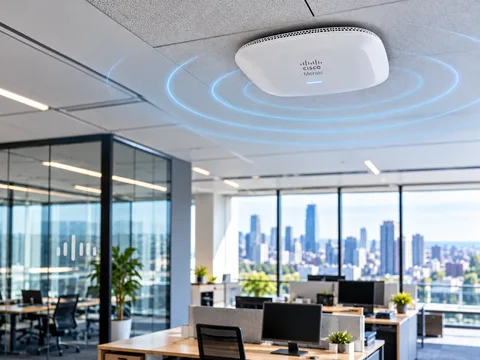
Acceptance checks cover membership, link state, uplink forwarding and the attached services. Agreed tests may include a stacking-link failure, uplink loss or member restart where safe. We measure the service effect and verify restoration, not merely whether a status icon returns to normal. The handover states which scenarios were exercised and which remain untested.
MCI can assess an existing stack, prepare a new design or support a refresh across several UK sites. The deliverables include topology, compatibility findings, failure expectations and a replacement runbook. That gives engineers a practical operating model and helps the business distinguish the resilience it has actually tested from the resilience it has only assumed.

Technical references
- Meraki switch stacks — Cisco / Cisco Meraki
- Switch port configuration — Cisco / Cisco Meraki
Talk to a specialist
What does your network need next?
Tell us what you are planning, changing or trying to improve. We will help define a practical next step and the engineering scope.
+44 203 196 6566Choose option 1
sales@proxar.co.ukUK-wide service.
Most of our engineers are based in Kent, with a focus on London, Sussex, Essex and Berkshire.
Existing customers should use their agreed support and escalation channels. This form is for service enquiries, not a monitored emergency ticket.
Tell us what you need.
A short outline is enough. Please do not include passwords or sensitive network details.
Thank you. Your enquiry has been submitted.
Please check your name, email and message, then try again.
Your form session expired. Please try again.
Please wait a minute before sending another enquiry.
We could not submit your enquiry. Please call or email us instead.